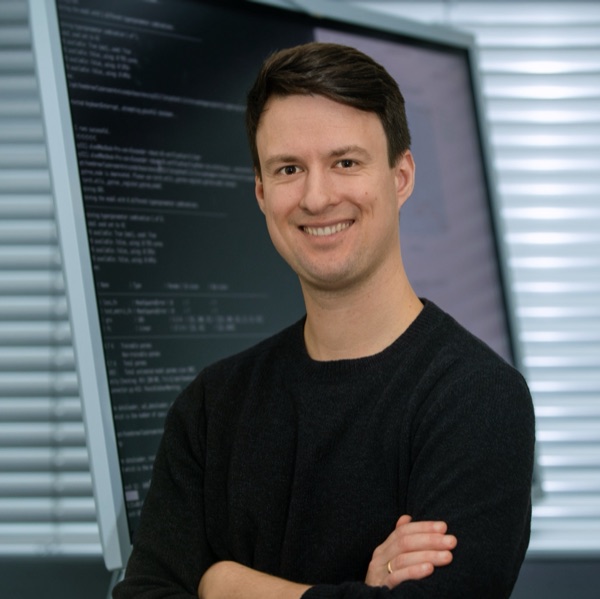
I design evaluations that show how machine learning models fail when sensors break or operating conditions change. I do this work as a doctoral candidate at Helmut Schmidt University in Hamburg, where I lead a machine learning research group for cyber-physical systems.
My main project is SensorFault-Bench, an open-source benchmark that tests how time series forecasting models degrade under controlled sensor faults. The paper introducing it was accepted at NeurIPS 2026. I have also co-authored benchmarks and evaluations for LiDAR sensor contamination, network intrusion detection, virtual sensing, and large language models on engineering tasks.
In standardization, I co-draft the guideline VDI/VDE 2670 Blatt 1 on AI model documentation and contribute to VDI guidance on AI safety and security.
I am interested in how we can evaluate more capable AI systems, understand where they fail, and use that understanding to make them safer.
Selected publications
- Benchmarking Sensor-Fault Robustness in Forecasting
A. Windmann, P. Wittenberg, G. Manca, M. Dix, J. U. Brandt, O. Niggemann.
NeurIPS 2026, Evaluations & Datasets Track. arXiv · Code - Industrial AI Robustness Card for Time Series Models
A. Windmann, B. Stratmann, M. Lyashenko, O. Niggemann.
23rd IFAC World Congress, 2026. arXiv · Code - Quantifying Robustness: A Benchmarking Framework for Deep Learning Forecasting in Cyber-Physical Systems
A. Windmann, H. Steude, D. Boschmann, O. Niggemann.
IEEE ETFA 2025. DOI · arXiv · Code - Artificial Intelligence in Industry 4.0: A Review of Integration Challenges for Industrial Systems
A. Windmann, P. Wittenberg, M. Schieseck, O. Niggemann.
IEEE INDIN 2024. DOI · arXiv